
The Gallatin County Arrest Log
Gallatin County posts no sheriff-run arrest log online. There is no police blotter or rolling booking archive on the county's official pages either. The sheriff page works as an agency and contact resource. The county forms page is the documented route to records held by county government. Neither one displays names, charges, dates, or booking photos. A search result labeled “Gallatin County bookings” may come from an unofficial publisher. It may even come from the wrong state.
Custody splits across several offices. The arresting agency creates the arrest or incident report. The receiving jail keeps its own intake and custody records. Gallatin arrests have been lodged at Carroll County Detention Center. That detail comes from official Kentucky State Police releases. A 2025 fiscal-court report documented Grant County authority to accept Gallatin inmates. Prosecution events and disposition then land in the Gallatin court file. No one source holds all three parts.
Read Gallatin Arrest Reports
Anchor your search in stable facts. That means the full name, the approximate arrest date, the arresting agency, and the likely place of custody. Labels can trip you up. A Warsaw dateline, a Gallatin charge, and a Carroll booking may all describe one event. Treat each label as a clue, nothing more. For a same-day check, the 24 Hour Arrests page fits better; this method targets a past weekend or an older trace.
- Check the Kentucky State Police news archive for a dated release. It is official but selective.
- Call the Gallatin sheriff or dispatch to confirm which agency acted and which facility received the person.
- Ask that jail for current custody or its public-records route. A roster reflects custody, not every county arrest.
- Search the Kentucky Judicial Indexes or contact the Circuit Court Clerk for later court events.
- Request a county-held arrest list or report through the Gallatin County forms page.
News often comes first. Work backward by date from the story. Confirm the agency, location, and lodging facility against an official record, because publication dates can differ from arrest and booking dates, and court filing may come later still.
Gallatin Arrest Log Fields
Kentucky's retention schedule names a “Daily Record (List) of Arrests.” It draws on adult booking information, feeds public inquiries, and holds no court data. Gallatin does not expose that list online. Naming the existing record series still makes a records request precise, so ask for a record rather than a custom report.
| Field | What to verify |
|---|---|
| Name | Confirm spelling and enough detail to distinguish similar names. |
| Arrest time | Separate arrest, booking, publication, and court dates. |
| Agency | Identify Warsaw Police, the sheriff, KSP, or another agency. |
| Charge as booked | Read it as an charge. |
| Committing authority | Use it to route the incident-report request. |
| Receiving facility | Confirm where intake occurred because lodging is case-specific. |
| Discharge status | Verify directly; an old log cannot prove current custody. |
Booking and disposition are different animals. Booking is jail intake after an arrest. Disposition is the court's final handling of a charge, which can shift through amendment, reduction, or dismissal, so the official court record settles the outcome.
Gallatin Arrest News Patterns
The strongest secondary trail is the Gallatin County News archive. Its search results expose weekly pages carrying “Courthouse Report” and “Jail Report” material. That issue-based cadence helps most after several days, once no current roster remains visible. Newspaper coverage has limits, though. An issue may omit an event, summarize a period, or lack the later outcome. Treat it as a lead worth confirming.
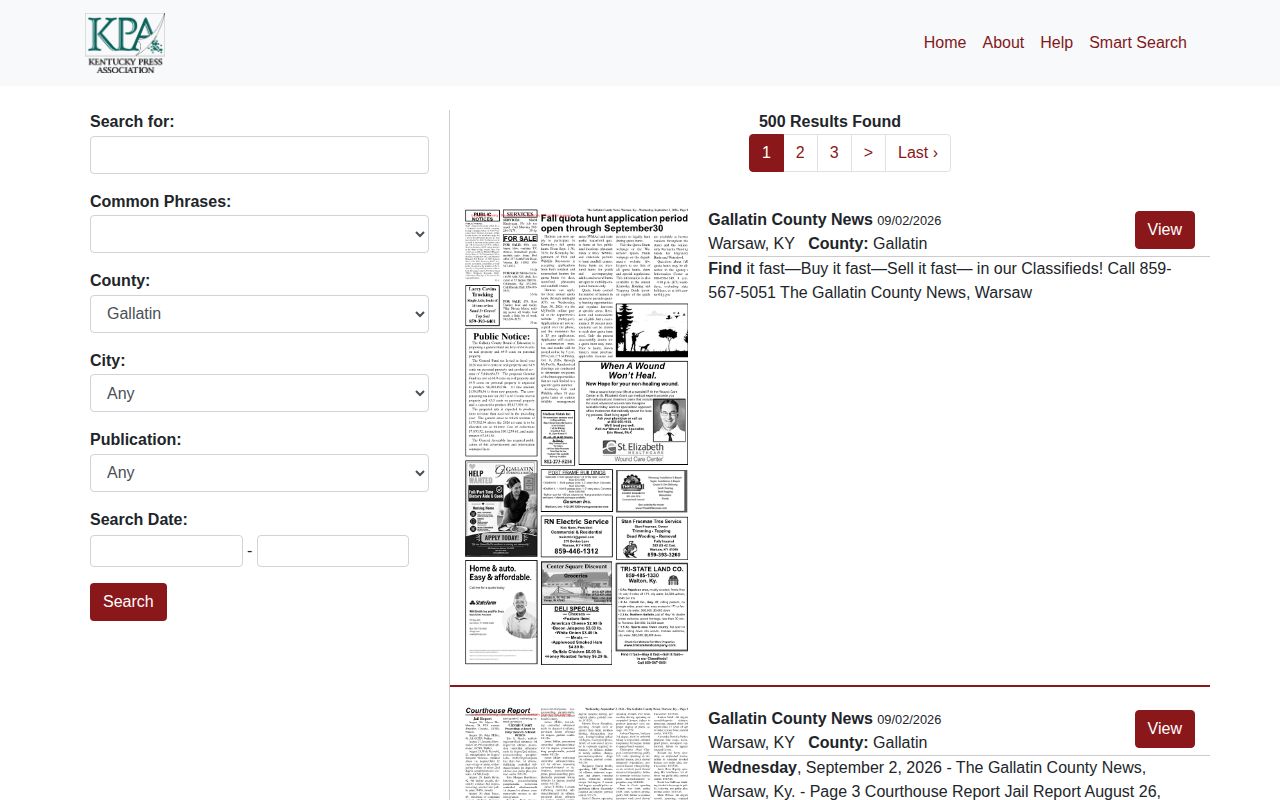
The newspaper archive is a search interface. It is not a complete arrest list or proof of current custody. KSP releases are event-driven. An event has to merit one first. Regional outlets like WCPO and 95.3 WIKI run similar reports. A story can supply an agency statement or the reported lodging site. But none of these outlets are all-arrests feeds. An article image may be stock art rather than a booking photo.
Gallatin Booking Location Quirks
Geography misleads in Gallatin County. An arrest there does not guarantee a jail with a Gallatin name. Custody often lands elsewhere. Official KSP releases show Carroll County Detention Center receiving people arrested in Gallatin. A 2025 fiscal-court report says Grant County may accept Gallatin inmates under an open contract. A later case could involve yet another lawful placement. The official KSP Gallatin release shows how an event report names the receiving facility. So confirm lodging case by case.

That release is one historical example. It does not promise Carroll receives every Gallatin booking. Two questions cut through the confusion. Ask which agency owns the arrest report and which jail completed the booking. The first answer points to the report; the second points to custody data and any booking image, though a photo may be restricted or unavailable. Note: City, county, agency, and jail names may differ while pointing to a single arrest event.
Gallatin Arrest Court Outcomes
Court records fill the gap a blotter leaves. Booking facts stay in the arrest list. The court file adds filed charges, hearings, orders, and disposition. Start with the Gallatin Court of Justice page. The Kentucky Judicial Indexes search is the official case-index channel. Online index data is not real-time, so verify key details with the clerk.
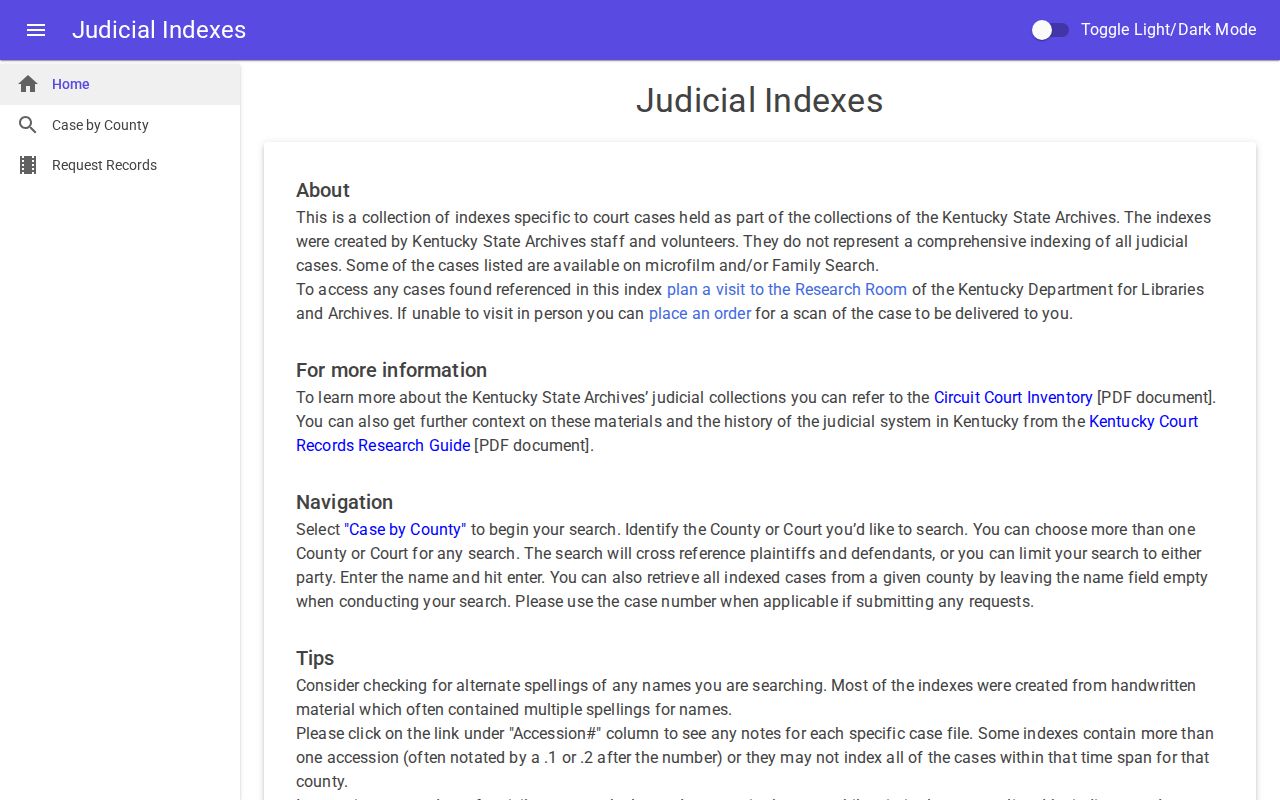
The index locates cases; the clerk's record still controls.
Gallatin Arrest Log Archives
When an arrest record vanishes from the web, the paper trail usually still exists. Kentucky's County Jailer Records Retention Schedule sets destruction. It comes five years after release for the closed jail-register series. Other series follow different clocks. The Local Government General Records Schedule gives some non-felony investigation files five years. Criminal-history jackets can run 50 years from the last entry. Fingerprint files, which may hold booking data and a mug shot, can last 80 years. Daily arrest lists face the loosest rule of all. They may be destroyed as soon as the agency no longer needs them. None of this promises a public online archive.
Planning an older request takes a little prep. Name the series, the agency, the person, and the date range. It helps to ask whether an active digital or paper series replaced a closed one. Expect withholdings or redactions for protected, juvenile, sealed, expunged, or active-investigation material.
Gallatin County handles its requests in writing through Amy Stewart, Administration Specialist. Reach her at countyadmin@gallatinky.org or PO Box 144, Warsaw, KY 41095. Hand delivery works too. The county promises a response within five business days, and electronic responses cost nothing. Paper copies run $0.10 per page. Photos and other items carry the production cost quoted in advance. A large electronic response on a flash drive adds only the actual $3 drive cost.
For the final case result, the Circuit Clerk is the right stop. Older Gallatin County cases may sit at the clerk. Some move to a records facility, and others are destroyed under court schedules. An arrest log starts the trail. It rarely finishes it.
Note: Retention rules govern agency files; they do not guarantee public online access for the full period.